Spring Pasta With Asparagus And Peas
Highlighted under: Healthy Inspirations
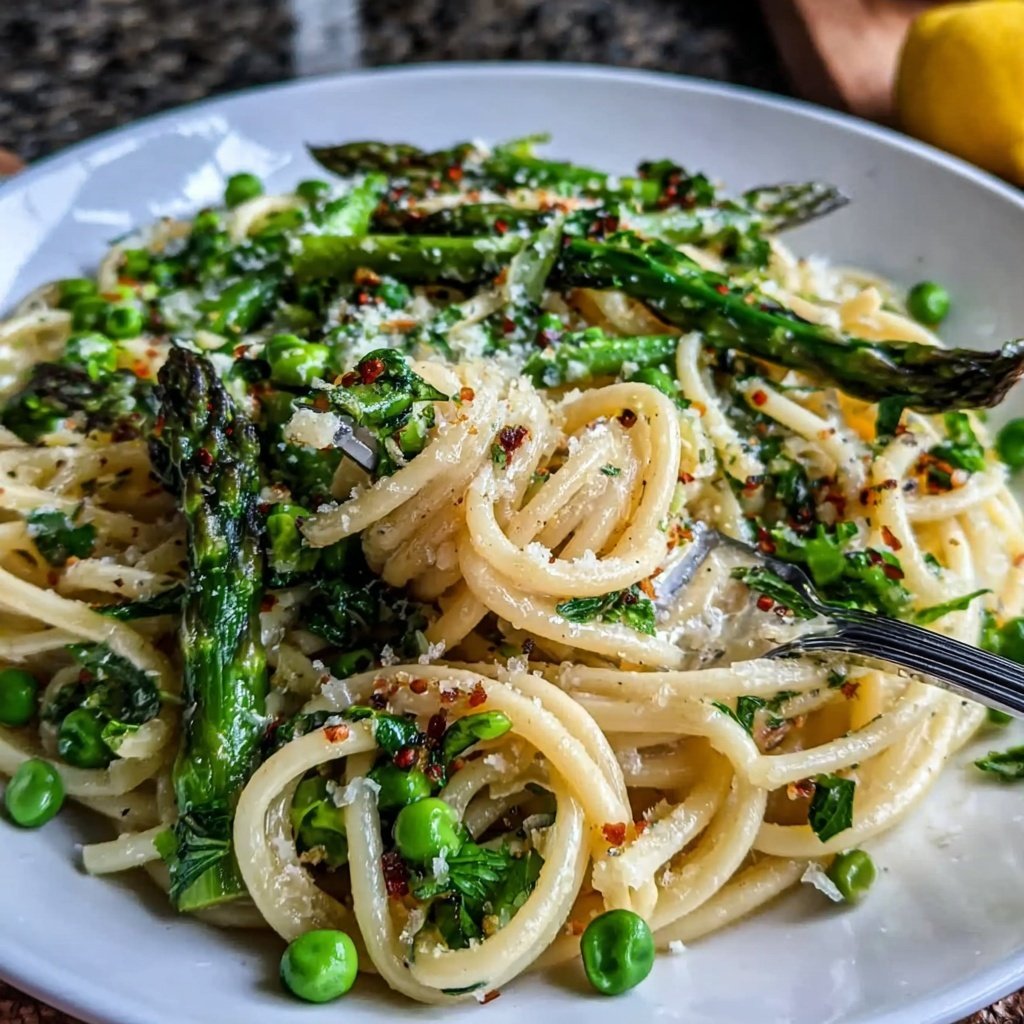
I always look forward to spring when fresh vegetables are abundant, and this Spring Pasta with Asparagus and Peas is one of my favorite dishes to celebrate the season. The vibrant green of the vegetables not only brightens up the dish but also provides a delightful crunch and freshness that I crave. With just a handful of ingredients, this recipe comes together quickly and makes for a light yet satisfying meal. Whether for a weeknight dinner or a special gathering, this pasta is sure to impress.
When I first crafted this recipe, I wanted to make a dish that truly highlighted the fresh flavors of spring. Combining sweet peas with tender asparagus gave the pasta a beautiful freshness that I couldn't resist. I found that using a squeeze of lemon juice at the end not only brightens the flavors but also brings the whole dish together.
One of the keys to making this dish shine is not overcooking the vegetables. I learned that blanching them briefly helps maintain their vibrant colors and crunch, creating an appealing texture in every bite. This approach ensures every forkful is full of that delightful spring essence I adore.
Why You'll Love This Recipe
- Bright and fresh flavors that scream spring
- Quick prep and cook time for busy weeknights
- Healthy ingredients that nourish without sacrificing taste
The Importance of Fresh Ingredients
Using fresh vegetables not only enhances the flavor of this Spring Pasta with Asparagus and Peas, but it also significantly elevates the dish's nutritional value. Fresh asparagus and peas are packed with vitamins A, C, and K, as well as fiber. When selecting asparagus, look for firm, bright green spears with tightly closed tips, which indicate freshness. If using frozen peas, be sure to add them just at the end of cooking to retain their vibrant color and sweet flavor.
The quality of your pasta can also impact the final result. I recommend opting for high-quality durum wheat pasta, such as fettuccine or linguine, as it provides a better texture and holds up well with the vegetables. Cook the pasta until al dente for the perfect bite; it should have a slight firmness in the center. This prevents the pasta from becoming mushy when mixed with the other ingredients.
Perfecting Texture with Cooking Techniques
Blanching the asparagus and peas is a crucial step that preserves their vibrant color and crunch. When you blanch them, it’s important to quickly transfer them to an ice bath after cooking. This technique halts the cooking process and locks in their bright green shade, making the dish visually appealing. Keep the vegetables in the ice bath for at least 2 minutes to ensure they're thoroughly chilled before adding them to the pasta.
When sautéing garlic, watch carefully to avoid burning. Ideally, the garlic should become fragrant and golden but not browned. Brown bits can impart a bitter flavor that may overpower the dish. Stir gently and consistently in the skillet at medium heat, and aim to use high-quality olive oil for its rich flavor and health benefits.
Serving and Storing Suggestions
This Spring Pasta is incredibly versatile when it comes to serving. Feel free to add grilled chicken, shrimp, or a sprinkle of red pepper flakes for an extra kick. The zesty lemon juice and zest enhance the pasta's freshness, but for those who prefer a creamier sauce, a splash of heavy cream can be stirred in at the end for a more indulgent version. Top with freshly grated Parmesan cheese just before serving for an added layer of umami flavor.
If you're planning to make this dish ahead of time, you can store the cooked pasta and vegetables separately in airtight containers in the refrigerator for up to 3 days. When ready to eat, simply reheat each component in a skillet with a splash of reserved pasta water to bring back the original creaminess. This dish can also be enjoyed cold as a pasta salad, making it a fantastic option for picnics and potlucks.
Ingredients
Gather these simple ingredients to make this delightful dish:
Ingredients
- 12 oz pasta (e.g., fettuccine or linguine)
- 1 cup fresh asparagus, trimmed and cut into bite-sized pieces
- 1 cup fresh peas, or frozen peas if out of season
- 2 cloves garlic, minced
- 2 tablespoons olive oil
- Zest of 1 lemon
- Juice of 1 lemon
- Salt and pepper to taste
- Parmesan cheese for serving (optional)
These ingredients will make a delicious and colorful spring pasta!
Instructions
Follow these easy steps to prepare your pasta:
Cook the Pasta
In a large pot of boiling salted water, cook the pasta according to package instructions until al dente. Reserve 1 cup of pasta water, then drain the rest.
Blanch the Vegetables
In the same pot, add the asparagus and peas to boiling water for about 2 minutes. Remove them and submerge in an ice bath to stop the cooking process.
Sauté the Garlic
In a large skillet, heat the olive oil over medium heat. Add minced garlic and sauté for about 30 seconds until fragrant.
Combine Everything
Add the cooked pasta, blanched asparagus, and peas to the skillet. Toss to combine, adding reserved pasta water as needed for creaminess. Stir in lemon zest, juice, and season with salt and pepper.
Serve
Plate the pasta, sprinkle with Parmesan cheese if desired, and enjoy your spring dish!
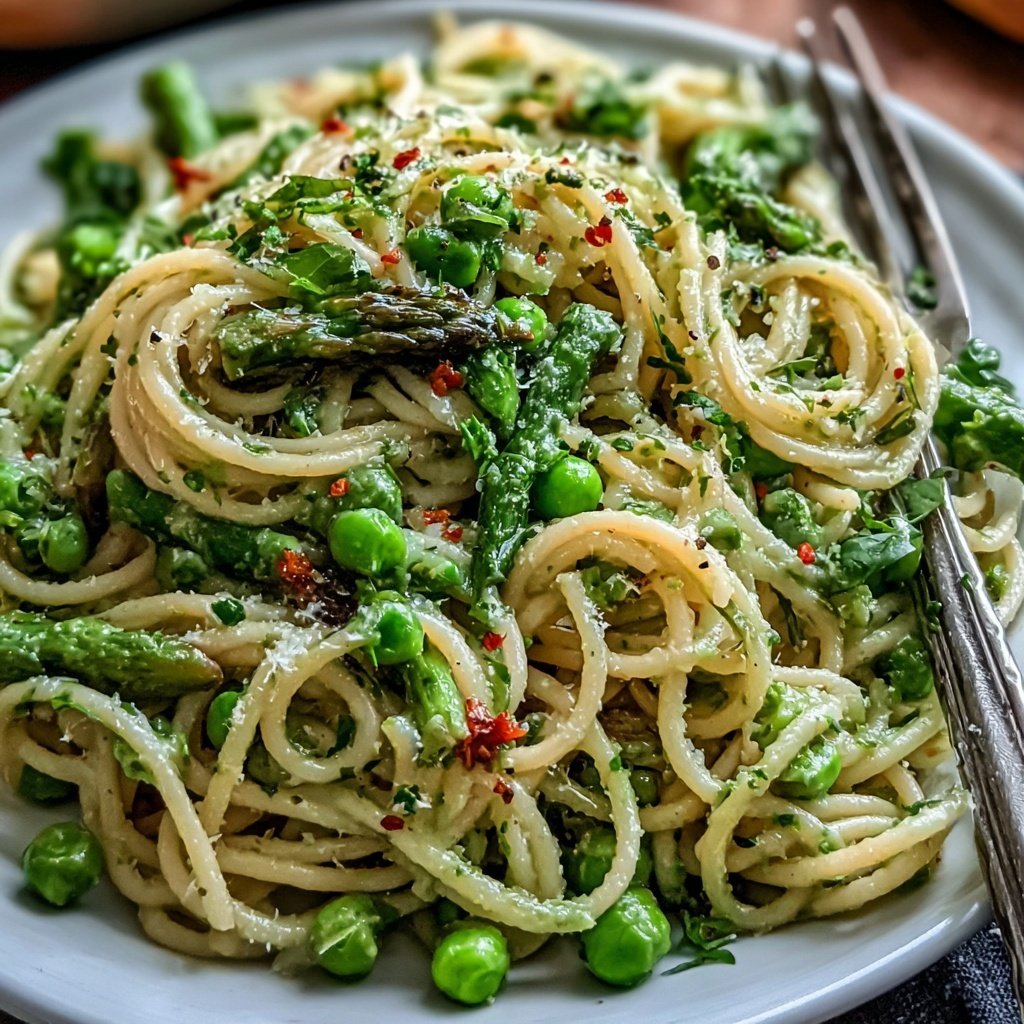
Your beautiful Spring Pasta with Asparagus and Peas is ready to be enjoyed!
Pro Tips
- For added flavor, consider tossing in some fresh herbs like basil or mint, or a handful of cooked chicken or shrimp for protein.
Ingredient Substitutions
If asparagus is not available, you can easily swap it out for green beans or broccolini. Both alternatives maintain a similar crunch and visual appeal. For a twist on flavor, try adding cherry tomatoes for a burst of sweetness. Similarly, if fresh peas are not in season, frozen peas work perfectly—just add them in the last minute of cooking to retain their color and texture.
For a gluten-free version of this dish, consider using gluten-free pasta made from brown rice or quinoa. These alternatives bounce back well when cooked properly, but keep in mind that they often require less cooking time, so monitor them closely to avoid overcooking.
Scaling Up for Gatherings
If you're expecting a crowd, this recipe can be easily scaled up. Simply double or triple the ingredients, remembering to cook the pasta in batches to ensure an even texture. Make sure to adjust your pot size accordingly; larger pots will help manage the boiling water effectively.
When scaling, consider keeping the sauce components (olive oil, lemon juice, garlic) consistent but tasting as you go. Adding ingredients gradually allows you to achieve the right balance of flavors, particularly the acidity from the lemon, which can become overpowering if multiplied too much.
Questions About Recipes
→ Can I use frozen peas?
Absolutely! Frozen peas will work just as well and are a great time saver.
→ What other vegetables can I add?
You can also include bell peppers, zucchini, or even baby spinach for extra nutrition and flavor.
→ How do I store leftovers?
Store leftovers in an airtight container in the fridge for up to 3 days. Reheat gently on the stove.
→ Can I make this vegan?
Yes! Simply omit the Parmesan cheese or use a vegan alternative.
Spring Pasta With Asparagus And Peas
Created by: Heidi Lawson
Recipe Type: Healthy Inspirations
Skill Level: Easy
Final Quantity: 4 servings
What You'll Need
Ingredients
- 12 oz pasta (e.g., fettuccine or linguine)
- 1 cup fresh asparagus, trimmed and cut into bite-sized pieces
- 1 cup fresh peas, or frozen peas if out of season
- 2 cloves garlic, minced
- 2 tablespoons olive oil
- Zest of 1 lemon
- Juice of 1 lemon
- Salt and pepper to taste
- Parmesan cheese for serving (optional)
How-To Steps
In a large pot of boiling salted water, cook the pasta according to package instructions until al dente. Reserve 1 cup of pasta water, then drain the rest.
In the same pot, add the asparagus and peas to boiling water for about 2 minutes. Remove them and submerge in an ice bath to stop the cooking process.
In a large skillet, heat the olive oil over medium heat. Add minced garlic and sauté for about 30 seconds until fragrant.
Add the cooked pasta, blanched asparagus, and peas to the skillet. Toss to combine, adding reserved pasta water as needed for creaminess. Stir in lemon zest, juice, and season with salt and pepper.
Plate the pasta, sprinkle with Parmesan cheese if desired, and enjoy your spring dish!
Extra Tips
- For added flavor, consider tossing in some fresh herbs like basil or mint, or a handful of cooked chicken or shrimp for protein.
Nutritional Breakdown (Per Serving)
- Calories: 450 kcal
- Total Fat: 14g
- Saturated Fat: 2g
- Cholesterol: 0mg
- Sodium: 220mg
- Total Carbohydrates: 64g
- Dietary Fiber: 6g
- Sugars: 3g
- Protein: 13g